



Education for Sustainability
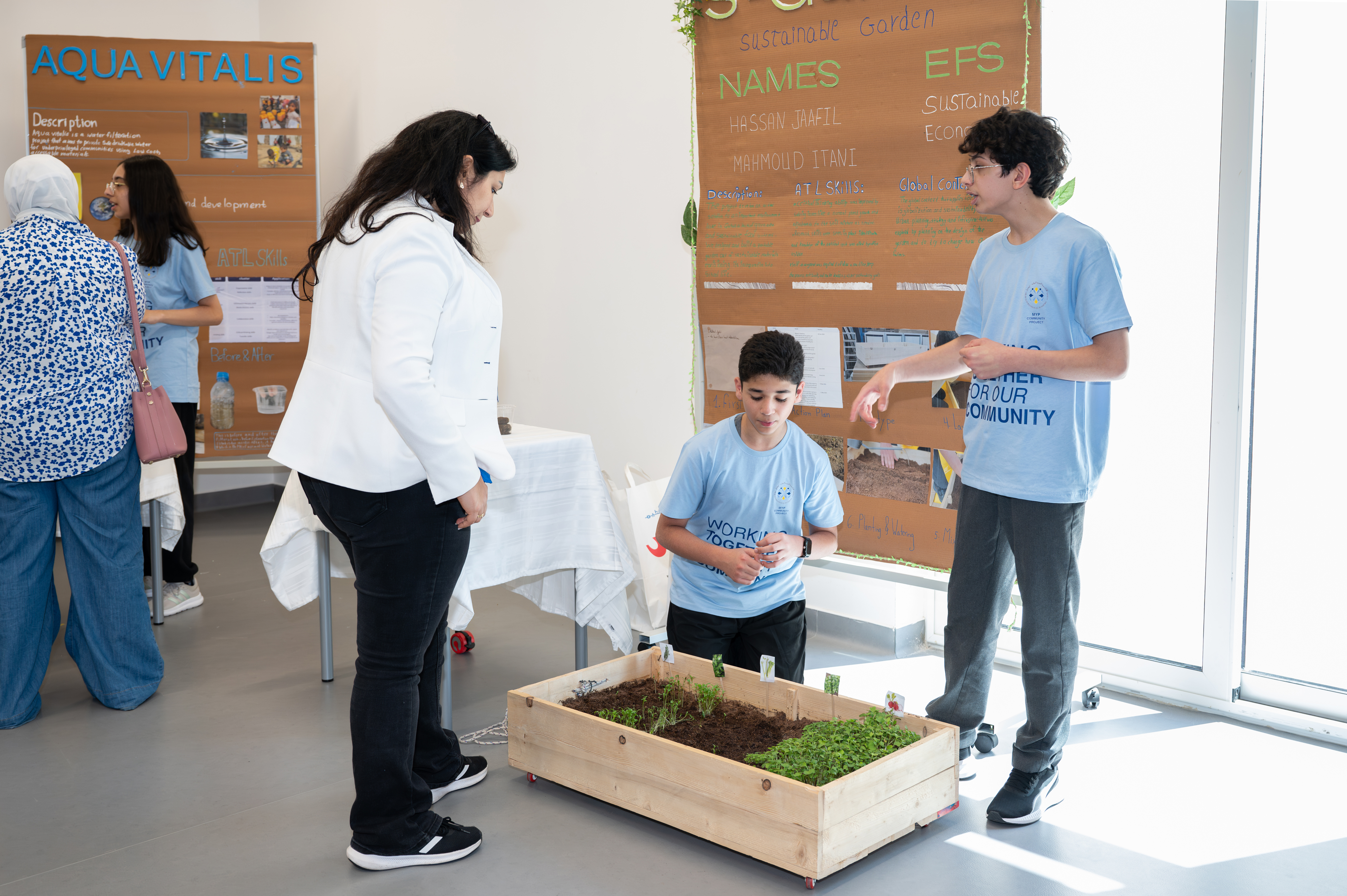
Education for Sustainability in the Secondary School represents a comprehensive educational approach that extends beyond traditional curriculum boundaries. It aims to cultivate awareness, critical thinking, and responsible action among students. By integrating sustainability concepts into learning, students explore the interconnectedness of environmental responsibility, social justice, and economic equity, and develop an understanding of their combined impact on contemporary societies.
This approach is grounded in experiential and applied learning. Students engage in discussing real-world issues, analyzing sustainability challenges, and developing innovative and practical solutions. Assessment extends beyond measuring academic knowledge and also evaluates students’ ability to apply their understanding in making informed decisions and addressing sustainability challenges effectively.
Effective education for sustainability is reflected in students’ ability to identify problems, analyze them from multiple perspectives, and propose creative solutions. In this way, critical thinking and problem-solving become integral to the learning experience. This approach also reinforces a mindset of lifelong learning and strengthens both individual and collective responsibility.
Through collaboration, purposeful action, and active engagement, students are empowered to become agents of positive change, contributing to a more sustainable future for themselves, their communities, and future generations.